 F&Bos
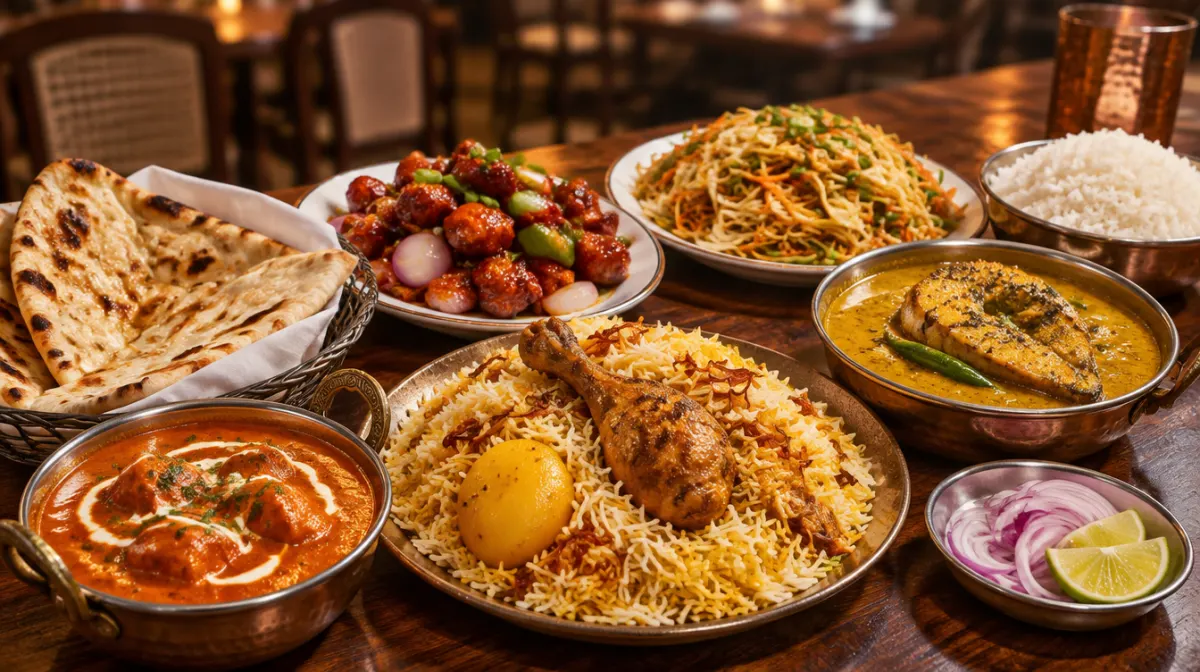
A multi-cuisine restaurant serves dishes from two or more distinct cuisines under one roof, such as North Indian, Chinese, biryani and continental. Each cuisine keeps its own section on the menu and, usually, its own station in the kitchen. It is different from a fusion restaurant, which blends cuisines into new dishes. In India it is the most common format for family restaurants: one table can order butter chicken, chilli chicken and biryani on the same bill.
What is a multi-cuisine restaurant?
"Multi-cuisine" simply means many cuisines. The restaurant chooses breadth over depth: instead of doing one cuisine very well, it gives a mixed group of diners something each of them wants. That's why it is the default for family dining, office lunches and highway stops across India.
The trade-off shapes everything else: more dishes, more ingredients, more specialist cooks and more kitchen stations than a restaurant of the same size that serves one cuisine.
| Format | What it serves | Example |
|---|---|---|
| Multi-cuisine | Several cuisines, each kept in its own menu section | North Indian, Chinese, biryani and continental on one menu |
| Speciality | One cuisine or one dish, done in depth | A biryani house or a South Indian tiffin centre |
| Fusion | Dishes that blend cuisines into something new | Butter chicken pasta, tandoori momos |
| Family restaurant | A dining style, not a menu type; most Indian family restaurants are multi-cuisine | A 60–100-cover dine-in with a mixed menu |
What does a multi-cuisine menu look like?
Here is an illustrative menu for a 70-cover family restaurant in Kolkata with 110 items. The revenue shares are an example to show the pattern, not data from a real outlet.
| Menu section | Items | Share of revenue |
|---|---|---|
| North Indian and Mughlai (tandoor, curries) | 32 | 38% |
| Chinese (Indo-Chinese, Kolkata style) | 28 | 24% |
| Biryani and rice | 14 | 20% |
| Bengali | 18 | 12% |
| Continental | 10 | 4% |
| Desserts and drinks | 8 | 2% |
| Total | 110 | 100% |
Look at revenue per item. Biryani earns about 1.4% of revenue per item on the menu; continental earns 0.4%. The continental section still needs its own ingredients, prep time and a cook who knows it. Sections like this are usually kept because a few regulars order them, not because they pay their way. Our menu engineering guide shows how to decide what stays.
How is a multi-cuisine kitchen organised?
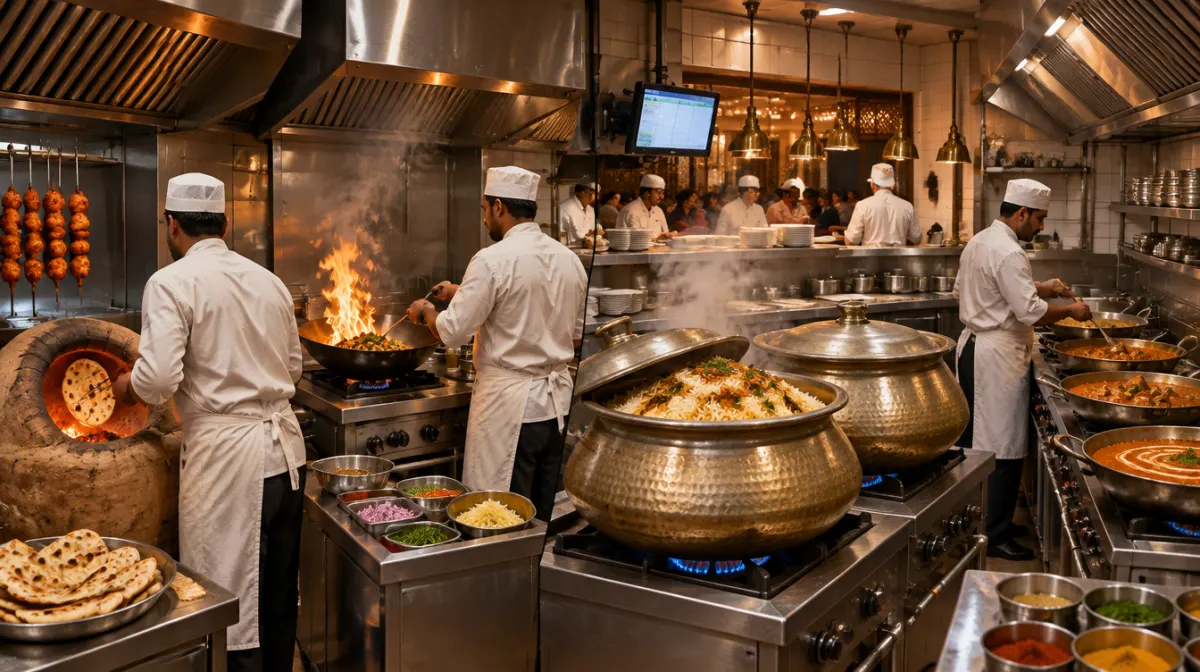
Most multi-cuisine kitchens run as several small kitchens side by side, each with its own station and usually its own cook:
- Tandoor: breads, kebabs and tikkas.
- Indian range: curries, dals and gravies, often shared with Bengali dishes.
- Wok station: Chinese starters, noodles and fried rice, on high-flame burners.
- Biryani: handis cooked in batches ahead of service.
- Cold and continental: salads, sandwiches, pasta and desserts.
A single table's order usually touches three or four stations. The food has to arrive together, so each station needs to see its items the moment the order is taken. That is the job of the KOT, or a kitchen display that routes each item to the right station.
What are the challenges of running a multi-cuisine restaurant?
Specialist staff. A tandoor cook can't take over the wok on a busy Saturday, so you need a specialist for each station. The kitchen payroll is higher than a single-cuisine restaurant of the same size, and one absence can shut down a whole section of the menu.
Ingredient sprawl. Every cuisine brings its own sauces, spices, cheeses and vegetables. Slow-moving items, like the cream and herbs for two pasta dishes, spoil before they're used. Our food waste guide covers why big menus waste more.
Menu bloat. Menus grow because adding a dish feels free. It isn't: each dish adds ingredients, prep and training. A smaller share of the menu usually brings in most of the revenue.
Consistency and timing. With four stations working at different speeds, the tandoor items can wait while the biryani is plated. Without clear tickets for each station, tables get their food in pieces.
What does a multi-cuisine restaurant P&L look like?
An illustrative month for the same 70-cover Kolkata restaurant. These are example figures to show the shape of the costs; your own will differ.
| Line item | Amount per month | Share of revenue |
|---|---|---|
| Revenue | ₹18,00,000 | 100% |
| Food cost | ₹6,12,000 | 34% |
| Staff | ₹3,60,000 | 20% |
| Rent and utilities | ₹2,88,000 | 16% |
| Delivery commissions and marketing | ₹1,26,000 | 7% |
| Gas, repairs, software and other costs | ₹1,08,000 | 6% |
| Operating profit, before tax and depreciation | ₹3,06,000 | 17% |
Food cost is the line a wide menu pushes up most. If pruning slow sections and their one-off ingredients brought food cost down by 1.5 percentage points, that would add ₹27,000 a month, or ₹3,24,000 a year, on this revenue. Check your own number with our food cost calculator, and see how to read a restaurant P&L.
What licences does a multi-cuisine restaurant need?
There is no separate "multi-cuisine licence". A multi-cuisine restaurant needs the same licences as any restaurant:
- FSSAI registration or licence, depending on turnover. One licence covers the whole kitchen, whatever cuisines you serve.
- GST registration. Most standalone restaurants charge 5% without input tax credit. See our GST guide for restaurants.
- Trade licence from your municipality, such as the Kolkata Municipal Corporation.
- Shops and establishments registration under your state's act.
- Fire safety clearance, depending on your size and building.
- A liquor licence only if you serve alcohol. In West Bengal, see our liquor licence guide.
Requirements and fees vary by state and city, so confirm them with your local authorities before you open.
How to keep a multi-cuisine menu profitable
- Review sales by section every month. Cut or shrink sections that earn little per item.
- Share ingredients across cuisines. The same chicken, onions and paneer can serve tandoor, Chinese and biryani dishes.
- Cost every dish. Know each dish's food cost at today's prices, not last year's. See the true cost of every dish.
- Route orders by station. Each station should see only its own items, the moment the order is taken.
- Train for backup. Make sure at least one other cook can run each station's core dishes.
Running a multi-cuisine restaurant on F&Bos
F&Bos is a restaurant POS with menu categories and variants, so each cuisine can sit in its own section with half and full portions. Captains can take orders at the table on the captain app, included from the Basic plan. On Pro, the kitchen display routes each item to its station, recipe-linked inventory deducts every ingredient on each bill, and MarginMind AI shows each dish's margin and ranks the menu, so you can see which sections earn their place.
Basic covers up to 50 menu items, so most multi-cuisine menus need Pro (₹15,000 per outlet per year, plus GST), which has unlimited items. See pricing or how recipe costing works.
Running a multi-cuisine kitchen?
See station routing, recipe costing and per-dish margins with your own menu in a free 20-minute demo.
Book a Free Demo → See dine-in POSFrequently asked questions
What is the meaning of a multi-cuisine restaurant?
A multi-cuisine restaurant serves dishes from two or more distinct cuisines, such as North Indian, Chinese and continental, under one roof. Each cuisine keeps its own section on the menu and usually its own station in the kitchen.
Is a multi-cuisine restaurant the same as a family restaurant?
Not exactly. Family restaurant describes the dining style, while multi-cuisine describes the menu. In India most family restaurants are multi-cuisine, because a mixed menu suits groups with different tastes.
How is a multi-cuisine restaurant different from a fusion restaurant?
A multi-cuisine restaurant serves each cuisine separately, so chilli chicken and butter chicken are cooked the traditional way at different stations. A fusion restaurant blends cuisines into new dishes, such as butter chicken pasta.
How many cuisines should a multi-cuisine restaurant serve?
There is no fixed number. Three or four is common in India. Each extra cuisine adds ingredients, a station and often a specialist cook, so add one only if it will sell enough to pay for those.
Does a multi-cuisine restaurant need a special licence?
No. It needs the same licences as any restaurant: FSSAI, GST registration, a municipal trade licence, shops and establishments registration and fire safety clearance where required, plus a liquor licence only if it serves alcohol.
How we wrote this
The menu and P&L tables are illustrative examples we built to show typical patterns; they are not data from a named restaurant. Licence and GST points match our own guides on GST and liquor licences. The F&Bos features and prices are from our pricing page as of November 2026.